Attending the 9th Global Public Health Conference in Bali was both a professionally enriching and personally meaningful experience. Travelling from South Africa to the beautiful island of Bali for the first time was made even more special by learning that part of my maternal ancestry traces back to the island. Family records indicate that one of my maternal ancestors was known as Dorothea of Bali. The warmth and hospitality I experienced throughout my visit, made Bali far more than simply the venue for an international conference.
Having attended numerous national and international conferences throughout my academic career, GlobHeal 2026 was distinctive in several respects. From the outset, the organisers demonstrated a deliberate commitment to creating an environment that fostered collaboration, engagement, and professional growth. Delegates were well prepared before the conference, and every aspect of the programme reflected an intention to move beyond simply presenting research towards building meaningful academic relationships.
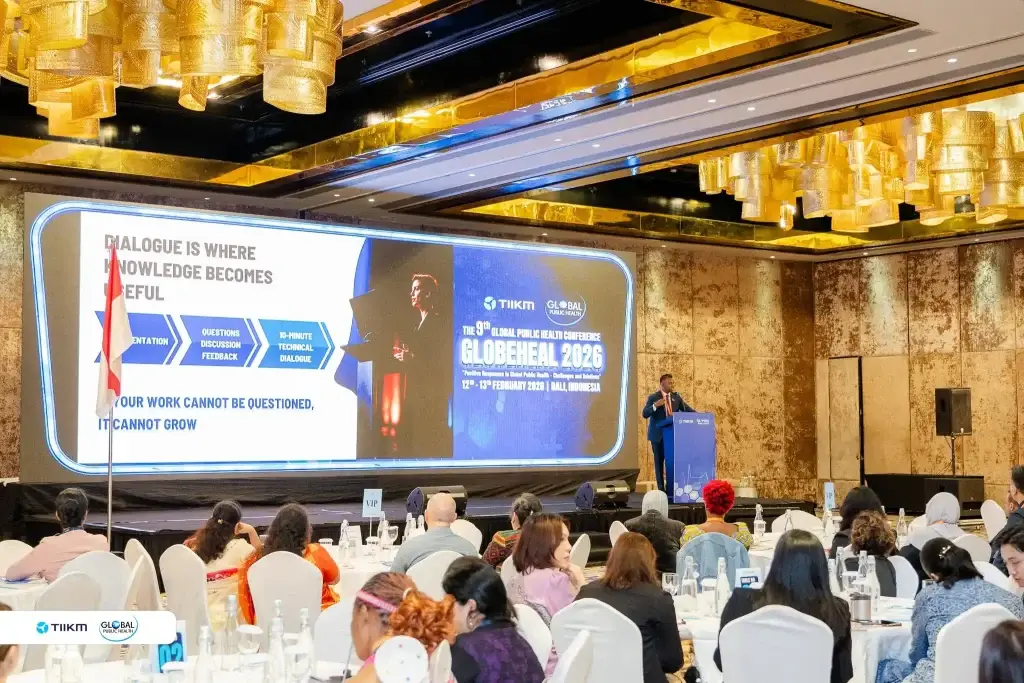
The opening ceremony captured this vision perfectly. I was particularly inspired by the emphasis on building capacity, creating networking opportunities, and celebrating the Global South. A presentation introducing the concept of moving “from paper presentations to global knowledge diplomacy” resonated deeply with me. The accompanying statements, “Knowledge without diplomacy equals noise” and “Dialogue without impact equals waste,” highlighted the importance of ensuring that research leads to collaboration, influence, and positive change rather than remaining confined to conference proceedings.
This philosophy was evident throughout the conference. Networking was intentionally embedded into the programme, from the seating arrangements during the opening ceremony to dedicated opportunities for delegates to connect, exchange ideas, and explore collaborative research, publication, and partnership opportunities. Rather than being passive participants, delegates were encouraged to become active contributors to a growing global public health community. What struck me was that so many of the attendees were young researchers who produced amazing work- an indication of the investment in young academics and researchers.
As an oral hygienist and academic, I am passionate about health promotion and the integration of oral health into broader health systems. Despite the substantial global burden of oral diseases and the well-established relationship between oral and general health, oral health continues to receive insufficient attention within health agendas. Presenting my research, Integration of Oral Health into Primary Health Care: Perspectives of Managers and Oral Health Practitioners, provided an invaluable opportunity to advocate for the inclusion of oral health within wider public health discussions. I was encouraged by the interest shown in my research and hope it contributed to stimulating further dialogue on the importance of integrating oral health into primary health care and universal health coverage.
The keynote presentations and scientific sessions covered an impressive breadth of public health topics. They challenged conventional thinking while reinforcing the value of interdisciplinary approaches to addressing global health challenges. Throughout the conference, I continually recognised opportunities to position oral health within these broader conversations, highlighting the importance of collaboration across disciplines and countries.
A valuable outcome of attending GlobHeal 2026 was the opportunity to initiate discussions regarding a potential partnership between the Faculty of Dentistry at the University of the Western Cape, South Africa, and TIIKM. Experiencing the conference firsthand demonstrated the potential for collaboration in research, staff and student exchanges, academic publications, and professional development. Following my return, I shared these experiences with colleagues in the Faculty, emphasising the value of presenting oral health research at multidisciplinary public health conferences. The Faculty of Dentistry is in discussions with TiiKM to formalise a partnership in the near future.
Beyond the academic programme, it was the people who made the conference truly memorable. I had the privilege of meeting delegates from across the world who generously shared their research, experiences, and perspectives. These conversations reinforced the importance of global partnerships in addressing shared public health challenges and locating oral health in initiatives to achieve relevant Sustainable Development Goals. Oral health has an essential role to play in these efforts and should be embedded within health services, collaborative research, policy development, and health system strengthening initiatives.
I extend my sincere appreciation to TIIKM/ Globheal 2026 for organising such a thoughtfully designed and impactful conference. The professionalism, dedication, and genuine commitment of the organising committee created an environment that encouraged learning, collaboration, and lasting professional connections. Finally, GlobHeal 2026 was an inspiring reminder that meaningful global partnerships are built through shared knowledge, purposeful dialogue, and a collective commitment to improving health for all.
By,
Prof Natalie Gordon
ngordon@uwc.ac.za
Share this post: